
Face-lit or halo-lit? Choosing how your letters glow
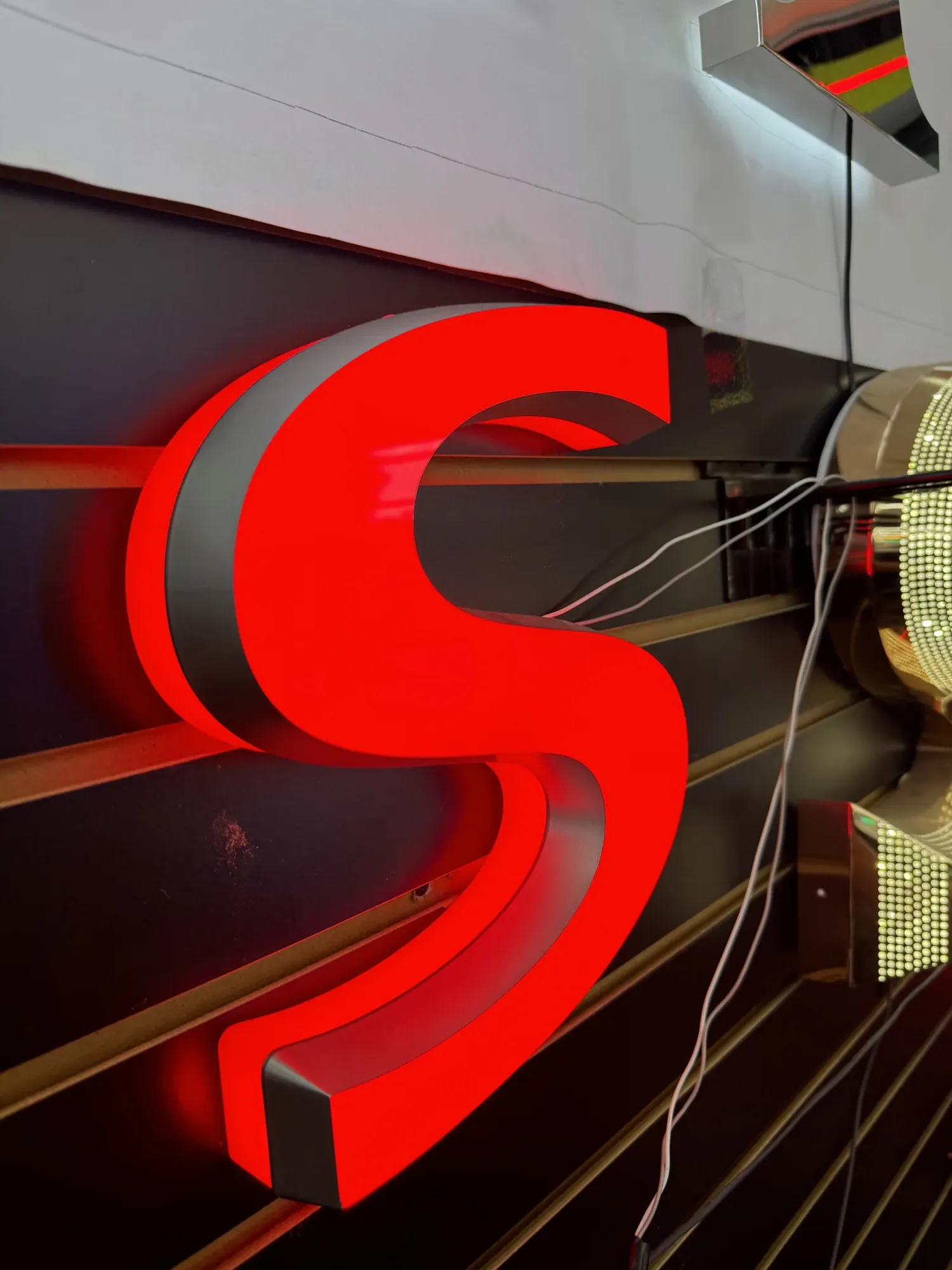
The same letterform reads completely differently depending on where the light comes out. A short guide to the two options and what each one costs you.
Face-lit: maximum reach
Light comes forward through an acrylic face. This is the loudest option and the one that holds up at road speed, in rain, and from the far side of a parking lot. If your business depends on being spotted by someone driving past at 45 mph, this is usually the answer.
Halo-lit: quieter, more expensive-looking
The face is opaque and the light spills backward onto the wall, leaving a glowing outline. It reads as considered and premium, and it photographs beautifully. It also depends entirely on the wall behind it: a light, flat surface gives you a clean halo, while dark brick eats it.
Combination
Both at once, and priced accordingly. Worth it for a flagship location where the sign is doing brand work as well as wayfinding.
Flush mount or raceway
Flush mounting fixes each letter to the wall individually, which looks cleanest but means more penetrations and more patching if the sign ever moves. A raceway is one painted channel holding the letters and the wiring; many landlords and older facades require it, and it makes a future re-brand far less painful.
The part that decides longevity
Module spacing and power supply headroom. Letters lit by too few modules develop hot spots and dark corners, and a supply run at its ceiling is the reason one letter goes dark in year three. Neither shows up on the quote comparison, and both show up on the building.